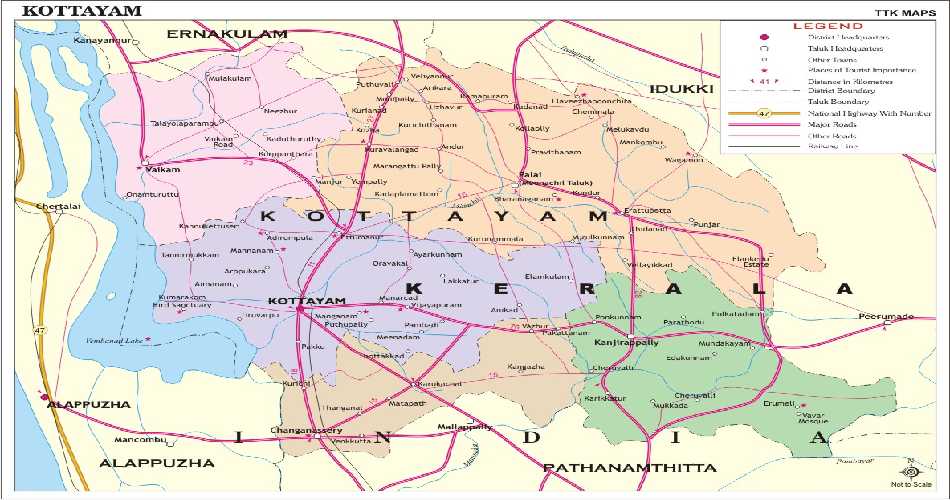
Kottayam is one of Kerala’s most balanced travel districts because it offers city convenience, peaceful backwaters, scenic hill viewpoints, heritage temples, village charm, rubber plantation landscapes, and easy access to nearby highland areas. It is often known as the land of letters, legends, latex, and lakes. Kottayam city is the district headquarters, while the western side is known for lake and backwater experiences and the eastern side for hills and natural beauty.
How to understand Kottayam on the map
Think of Kottayam in four simple travel zones.
1. Kottayam City Core
This is the main base for railway access, bus movement, shopping, hotels, restaurants, hospitals, and day-trip planning. It is the best area for first-time visitors who want easy transport and city facilities.
2. Kumarakom and the Backwater Belt
To the west of the city, Kumarakom is the most famous tourism zone in the district. It is known for Vembanad Lake, houseboat and shikara rides, birdwatching, village experiences, and lakeside resorts. This area is best for slow travel, families, couples, and photography lovers.
3. Vaikom Side
This side is ideal for heritage, temple visits, local culture, and backwater-linked sightseeing. Vaikom Mahadeva Temple is one of the best-known spiritual landmarks of the district.
4. Eastern Hills and Scenic Countryside
The eastern side offers hill views, trekking points, picnic spots, waterfalls, and plantation scenery. Ilaveezhapoonchira is one of the district’s best-known viewpoints and natural attractions.
Best areas to mark on your Kottayam tourist map
Kottayam City
Mark this as your main transport and service hub. This is the most practical place to stay if you want to explore different parts of the district without changing hotels.
Kumarakom
This should be one of the biggest highlights on your map. It is the signature backwater destination of Kottayam, known for Vembanad Lake, bird sanctuary visits, boat rides, village tourism, and lakeside stays.
Vembanad Lake
This is one of the defining natural features of the district. It is central to the Kumarakom experience and should be treated as the main scenic water body on any tourist map of Kottayam.
Kumarakom Bird Sanctuary
An important stop for nature lovers and birdwatchers. It is one of the district’s top eco-tourism attractions.
Vaikom Mahadeva Temple
Mark this on the northwestern side of your district plan. It is an ancient and respected temple, making it a major point for spiritual and cultural tourism.
Ilaveezhapoonchira
Place this on the eastern side of your map. It is known for panoramic views, open valleys, misty weather, and trekking-friendly surroundings.
Aruvikuzhy Waterfalls
A good scenic stop for short trips, picnics, and quick nature visits.
Poonjar Palace
A useful heritage destination if you enjoy history, architecture, and local royal culture.
Kurisumala
A hill and pilgrimage destination that suits travelers interested in peaceful spiritual travel combined with natural views.
Malarickal
Known for beautiful rural scenery and seasonal visual charm, this is a great place for photography lovers.
Simple tourist map layout for visitors
If you are drawing or planning a PDF map, arrange it like this:
Central Hub: Kottayam City
West / Southwest: Kumarakom, Vembanad Lake, bird sanctuary, village experiences
Northwest: Vaikom and Vaikom Mahadeva Temple
East / Southeast: Ilaveezhapoonchira, Kurisumala, waterfalls, palace region, plantation countryside
This layout helps tourists avoid unnecessary travel and group nearby attractions into easy day trips.
How to reach Kottayam
Kottayam is well connected by air, rail, and road.
By Air
The nearest major airport is Cochin International Airport. Thiruvananthapuram International Airport is another option for travelers coming from farther regions.
By Train
Kottayam has strong railway connectivity, making train travel one of the easiest ways to arrive. Many visitors choose to reach Kottayam by train and then use taxis, auto-rickshaws, buses, or private vehicles for local sightseeing.
By Road
Kottayam is well connected by road with regular bus services and easy road links to other major towns and cities in Kerala.
Best time to visit
For most travelers, the best time to visit Kottayam is from October to March. This period is comfortable for sightseeing, backwater travel, temple visits, birdwatching, and outdoor trips.
If you want greener scenery and dramatic natural beauty, the monsoon months can also be attractive, but some outdoor activities and boat experiences may be limited due to weather.
What each type of traveler should focus on
For first-time tourists
Stay in Kottayam city or Kumarakom. Cover Kumarakom, Vembanad Lake, the bird sanctuary, one heritage temple, and one scenic hill point.
For families
Choose Kumarakom for a relaxed stay, birdwatching, boat rides, and lakeside time.
For pilgrims and culture travelers
Plan visits to Vaikom Mahadeva Temple and Kurisumala. You can also add Poonjar Palace for heritage value.
For nature and photography lovers
Prioritize Kumarakom, Vembanad Lake, Ilaveezhapoonchira, Malarickal, and Aruvikuzhy Waterfalls.
For short trips
Use Kottayam city as your base and divide the trip into one backwater day and one hill or heritage day.
Suggested 2-day map-based travel flow
Day 1: City + Backwater Side
Start in Kottayam city, then move to Kumarakom. Explore Vembanad Lake, enjoy a boat ride, visit the bird sanctuary, and end the day with a lakeside sunset.
Day 2: Heritage or Hill Side
Option 1: Visit Vaikom Mahadeva Temple and nearby cultural areas.
Option 2: Visit Ilaveezhapoonchira for scenic views, fresh air, and a peaceful nature day.
Download Kottayam Tourist Map
Important helplines for travelers
- Ambulance: 108
- Police: 100
- Fire and Rescue: 101
- Women Helpline: 1091
- Child Helpline: 1098
- District Disaster Help: 1077
It is always a good idea to save these numbers before starting your trip.
Useful practical tips
- Book Kumarakom stays early if you are planning to travel during the peak tourist season.
- Keep one day flexible in your itinerary. Weather and travel pace can affect whether you enjoy more of the lake side or the hill side.
- Use Kottayam city as a transport anchor, but use Kumarakom as a leisure anchor.
- Carry light cotton clothes for warm days, but keep a light jacket or shawl for rainy evenings and hill visits.
- Wear comfortable footwear if you plan to explore waterfalls, countryside areas, or trekking spots.
Final visitor summary
Kottayam is not just a city stop. It is a layered travel destination where one map can guide you from city comfort to quiet backwaters, ancient temple culture, scenic valleys, birdlife, and countryside beauty. For most travelers, the smartest way to explore Kottayam is to divide it into city hub, backwater hub, heritage hub, and hill hub. Once you follow this plan, Kottayam becomes much easier to understand and much more enjoyable to explore.

About the Author
I’m a travel blogger and slow-travel explorer passionate about nature, culture, and real-life journeys. Through KeralaOrbit, I share authentic travel stories from Kerala—covering backwaters, hills, beaches, local food, and everyday experiences that reflect the true rhythm of life in God’s Own Country.
Travel Stories & Journey Narratives
HolidayLandmark Stories
– A storytelling platform capturing immersive travel journeys, quiet moments, and meaningful experiences.
Daily Travel Logs (Real-Time Experiences)
Bangalore Orbit – Everyday urban movement, neighborhoods, and city life.
Bhopal Orbit – Calm city walks, lakeside moments, and heritage-rich experiences.
Chennai Orbit – Coastal culture, temples, food streets, and local discoveries.
Gujarat Orbit – Cultural cities, heritage towns, and regional travel moments.
Kerala Orbit – Slow travel through backwaters, hill stations, and coastal Kerala.
Mera Apna Bihar – Grassroots stories and everyday life journeys.
Mumbai Orbit – Fast-paced city life, streets, and urban moments.
City Blogs & Travel Guides
HolidayLandmark Blog – Destination guides, travel tips, and curated experiences.
Bangalore Orbit Blog – Urban exploration, food spots, and city insights.
Bhopal Orbit Blog – Heritage walks, culture, and thoughtful travel.
Chennai Orbit Blog – History, temples, food culture, and coastal travel.
Gujarat Orbit Blog – Regional travel routes and cultural destinations.
Kerala Orbit Blog – In-depth Kerala travel guides, nature, and slow journeys.
Mera Apna Bihar – Stories rooted in Bihar’s people and traditions.
Mumbai Orbit Blog – Travel guides and city exploration from Mumbai.
Through KeralaOrbit and this interconnected travel network, my mission is to promote slow, mindful travel and share authentic experiences that inspire deeper connections with places, people, and local culture across India.
