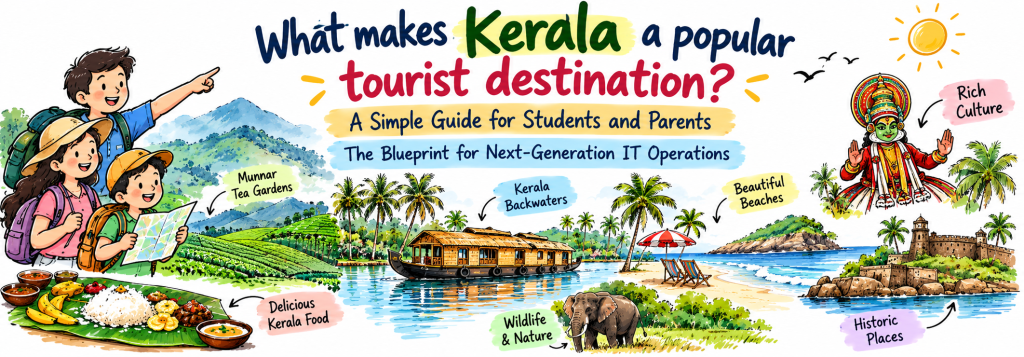
A Kerala trip can look very different from one traveler to another.
One family may spend a day on a houseboat.
Another may walk through tea gardens in Munnar.
A student may explore forests and learn about wildlife.
Someone else may come for the beaches, food, history, or culture.
That wide choice gives Kerala its special appeal.
The state brings many travel experiences into one journey.
You do not need to visit every famous place.
You can choose a few places that match your interests.
That simple approach can make the trip easier and more enjoyable.
Start With the Kind of Trip You Want
Before choosing hotels or booking tickets, think about your main goal.
Do you want rest?
Do you want adventure?
Do you want to learn something new?
Your answer can guide the whole trip.
| Travel Goal | Places or Experiences to Consider |
|---|---|
| Relaxation | Backwaters, beaches, wellness stays |
| Nature | Munnar, Wayanad, Thekkady |
| Wildlife | Forests and wildlife reserves |
| History | Fort Kochi, Bekal, museums |
| Food | Local markets and regional restaurants |
| Culture | Dance, music, festivals, crafts |
| Adventure | Trekking, hiking, boating |
| Family fun | Beaches, backwaters, sightseeing |
| Student learning | Wildlife, history, farming, culture |
This small decision can save time later.
Instead of asking, “What should I see in Kerala?”
Ask, “What do I want from my Kerala trip?”
That question gives you a better starting point.
The Landscape Changes as You Travel
Kerala has a long coastline and a large hill region.
The Western Ghats rise along its eastern side.
Between these areas, you can find forests, rivers, lakes, farms, towns, and villages.
This explains why two Kerala trips can feel completely different.
Mountains
Munnar gives travelers green hills and tea gardens.
The cool hill setting also creates a calm break from busy cities.
Waterways
Alappuzha and Kumarakom show another side of the state.
Their backwaters pass through villages and green landscapes.
Coast
Kovalam, Varkala, and Marari offer beach experiences.
Each place has its own feel and pace.
Forests
Thekkady and Wayanad attract people who enjoy wildlife and nature.
This mix gives travelers many choices without leaving the state.
Munnar: A Good Starting Point for Nature Lovers
Munnar sits in Kerala’s hill country.
Tea gardens cover many slopes around the area.
The scenery attracts people who enjoy quiet walks and mountain views.
Students can also learn about tea farming and local plants.
A simple Munnar day might look like this:
| Time | Possible Activity |
|---|---|
| Morning | Visit a tea garden |
| Late morning | Enjoy a viewpoint |
| Afternoon | Explore a nearby attraction |
| Evening | Take a relaxed walk |
| Night | Rest at the hotel |
You do not need to rush between many places.
Leave some time to enjoy the landscape.
That often becomes one of the best parts of a hill trip.
The Backwaters Give Kerala a Different Feel
Picture a quiet boat moving past green fields and village homes.
That is the kind of scene travelers often look for in Kerala’s backwaters.
Alappuzha has become a popular base for these trips.
Kumarakom also gives visitors access to the waterways.
Houseboats offer a slow way to explore the area.
What Can You Expect From a Houseboat?
Modern houseboats can include sleeping rooms, bathrooms, dining areas, and open decks.
The experience focuses less on reaching a destination quickly.
Instead, the journey itself becomes the attraction.
| Part of the Experience | What You May Notice |
|---|---|
| Waterways | Lakes, canals, and rivers |
| Villages | Homes and daily local activity |
| Farms | Green fields near the water |
| Food | Regional meals on some trips |
| Views | Changing scenery throughout the day |
| Evening | Quiet water and sunset views |
Families often enjoy this option because everyone can spend time together.
Wildlife Turns Travel Into a Learning Experience
Kerala also gives students a chance to see nature up close.
Thekkady and Wayanad offer forest and wildlife experiences.
Other protected areas provide more opportunities to learn about ecosystems.
A wildlife trip can teach more than animal names.
Students can notice how plants, water, insects, birds, animals, and people connect.
Try This Simple Student Activity
Ask children to record five things during the trip:
- A plant they have never seen.
- A bird they notice.
- A water source.
- A sign of farming or human activity.
- One rule that protects wildlife.
After the trip, ask them to explain what they learned.
This turns sightseeing into a small outdoor lesson.
Kerala’s Beaches Add a Relaxed Side
Not every traveler wants a packed schedule.
Sometimes, a beach walk and a quiet evening feel enough.
Kerala’s coastline gives visitors several options.
Kovalam and Varkala remain popular choices, while Marari offers another coastal setting.
Visitors can spend time walking, taking photos, enjoying local food, or watching the sunset.
Water activities require extra care.
Families should follow local safety rules and keep children close to adults.
History Feels More Real When You Walk Through It
Books can explain history.
Historic places let you see parts of that history yourself.
Fort Kochi gives visitors old streets, buildings, markets, and cultural attractions.
Bekal adds a large fort with views toward the coast.
Other museums and heritage sites can add more context.
| Place | What Visitors Can Explore |
|---|---|
| Fort Kochi | Old streets, architecture, and culture |
| Bekal | Fort and coastal landscape |
| Mattancherry | Heritage and local traditions |
| Museums | History and regional collections |
| Historic neighborhoods | Buildings and old city life |
Students can prepare for these visits before traveling.
Even a short reading can make the place easier to understand.
Culture Gives the Trip a Local Identity
Tourism becomes more interesting when visitors look beyond famous locations.
Kerala has traditional dance, music, theatre, crafts, rituals, and festivals.
Kathakali offers one of the best-known examples.
The costumes catch attention first.
Then the expressions, music, movement, and storytelling bring the performance to life.
Other traditional forms also show different parts of Kerala’s culture.
| Cultural Area | What Visitors May See |
|---|---|
| Dance | Traditional performances |
| Music | Regional instruments and songs |
| Theatre | Storytelling and acting |
| Crafts | Handmade local products |
| Festivals | Food, dance, music, and community events |
| Ritual arts | Traditional ceremonies and performances |
Visitors should respect local customs during cultural and religious events.
Food Can Become Part of the Itinerary
You do not need a separate food tour to explore Kerala’s cuisine.
Try local dishes during normal meals.
Ask restaurants about regional specialties.
Some dishes you may find include:
| Dish | Simple Description |
|---|---|
| Puttu | Steamed rice-based dish |
| Kadala curry | Spiced chickpea curry |
| Appam | Soft rice-based pancake |
| Fish curry | Regional fish preparation |
| Sadya | Traditional meal with many dishes |
| Malabar snacks | Regional snacks and treats |
Food preferences differ from person to person.
If you have allergies, ask about ingredients before ordering.
Ayurveda Adds a Wellness Option
Some travelers want more than sightseeing.
They want time to slow down and relax.
Kerala has a strong connection with Ayurveda and wellness tourism.
Visitors can find wellness services in different parts of the state.
A wellness-focused trip can include quiet surroundings and traditional practices.
However, visitors should check providers carefully.
They should also understand the service before making a booking.
Festivals Bring Local Life Into Focus
A festival can change the feel of a destination.
Onam stands out as one of Kerala’s major festivals.
Vishu and Christmas also form part of the state’s cultural calendar.
Visitors may see traditional food, decorations, music, dance, and community events.
Festival travel needs more planning than a normal sightseeing trip.
| Before You Go | Why Check It? |
|---|---|
| Festival date | Events may follow specific dates |
| Accommodation | Popular periods can increase demand |
| Transport | Roads may become busier |
| Event rules | Some programs may need registration |
| Local timings | Activities can follow special schedules |
Check current local information before making a festival plan.
A Family Trip Needs a Different Plan
Parents often need to balance several needs.
Children want interesting activities.
Parents may want comfort and enough rest.
The solution does not require a complicated itinerary.
Choose one main activity each day.
Then add one or two smaller activities nearby.
| Family Member | Possible Interest |
|---|---|
| Young children | Beaches and easy sightseeing |
| School students | Wildlife and history |
| Teenagers | Trekking and outdoor activities |
| Parents | Food, culture, nature, wellness |
| Everyone | Backwaters and relaxed sightseeing |
Avoid moving between distant places every few hours.
A slower route can give the family more time together.
Turn the Holiday Into a Student Project
Parents can add learning without making the trip feel like school.
Pick one topic before leaving.
For example:
“How does water shape life in Kerala?”
Students can observe:
- Boats
- Canals
- Lakes
- Farms
- Fishing
- Village homes
- Water-based transport
Another trip could focus on forests.
Students can compare plants, animals, weather, and human activity.
This approach helps children pay attention to their surroundings.
Adventure Travelers Have Options Too
Kerala also works for people who prefer active holidays.
Depending on the location and local rules, travelers can try trekking, hiking, boating, nature walks, and other outdoor activities.
The right activity depends on age, fitness, weather, and local conditions.
| Activity | Suitable Setting |
|---|---|
| Trekking | Hill regions |
| Hiking | Mountain trails |
| Boating | Lakes and backwaters |
| Nature walks | Forest areas |
| Wildlife trips | Protected areas |
| Camping | Approved outdoor locations |
Use trained guides when an activity requires special skills.
Safety should come before the excitement of the activity.
How Can You Build a Better Kerala Route?
One common mistake involves choosing destinations without checking the distance between them.
Instead, group places that work well together.
For example:
Kochi → Munnar → Thekkady
This route can combine city culture, hills, and wildlife.
Another trip could focus more on the coast and backwaters.
Kochi → Alappuzha → Varkala
The best route depends on your travel dates and transport.
A Simple Route-Building Method
First: Pick your main experience.
Next: Choose a suitable region.
Then: Add nearby places.
After that: Check travel time.
Finally: Leave some free hours.
This method keeps the itinerary simple.
Sample Plans for Different Travelers
Three Days
| Day | Focus |
|---|---|
| Day 1 | Kochi and Fort Kochi |
| Day 2 | Alappuzha backwaters |
| Day 3 | Local sightseeing and departure |
Five Days
| Day | Focus |
|---|---|
| Day 1 | Kochi |
| Day 2 | Munnar |
| Day 3 | Munnar surroundings |
| Day 4 | Thekkady |
| Day 5 | Return journey |
These plans serve as examples.
Actual travel time depends on roads, transport, and hotel locations.
What Can Go Wrong Without Planning?
A beautiful destination can still become tiring if you pack too much into each day.
Here are some problems travelers often create for themselves.
| Problem | A Simple Fix |
|---|---|
| Too many destinations | Choose fewer places |
| Long daily drives | Group nearby locations |
| No rest time | Keep empty periods |
| Weather surprises | Check conditions before travel |
| Late hotel booking | Reserve popular stays early |
| Unknown booking services | Use trusted sources |
| Ignoring local rules | Check official guidance |
| No backup plan | Keep one flexible option |
Good travel planning does not mean planning every minute.
It means knowing what matters and leaving room for change.
What Should You Pack?
Your packing list depends on the places you choose.
Still, a few basic items can help most travelers.
- Comfortable walking shoes
- Light clothes
- Rain protection
- Reusable water bottle
- Sun protection
- Personal medicines
- Phone charger
- Small day bag
- Important documents
Check the weather before leaving home.
That simple step can change what you need to carry.
Responsible Travel Matters
Popular destinations need care from visitors.
Use bins and avoid leaving waste behind.
Follow rules in forests, beaches, and protected areas.
Respect local traditions.
Ask before taking photos of people or private activities.
You can also support local shops, guides, restaurants, and craft sellers.
| Good Habit | Benefit |
|---|---|
| Carry reusable items | Creates less waste |
| Follow local rules | Protects people and places |
| Support local businesses | Helps local communities |
| Respect traditions | Builds better visitor relationships |
| Keep noise low | Reduces disturbance |
| Protect natural areas | Helps preserve the destination |
Small actions can make a real difference.
Which Kerala Experience Matches You?
Use this quick guide when you feel unsure.
| If You Enjoy… | Consider… |
|---|---|
| Green hills | Munnar |
| Quiet water | Alappuzha or Kumarakom |
| Wildlife | Thekkady or Wayanad |
| Beaches | Kovalam, Varkala, or Marari |
| History | Fort Kochi or Bekal |
| Local food | Regional markets and restaurants |
| Culture | Traditional performances |
| Wellness | Ayurveda experiences |
| Outdoor activities | Hills and forest areas |
You can also mix two or three interests.
That often creates a more balanced trip.
Kerala Travel Checklist
Before leaving, take a few minutes to check your plan.
- Confirm travel dates.
- Check the weather.
- Confirm hotel bookings.
- Plan the main route.
- Check attraction timings.
- Confirm tickets or permits.
- Save important phone numbers.
- Plan meals.
- Add rest periods.
- Keep a backup activity.
- Check local travel rules.
A short checklist can prevent many avoidable problems.
Frequently Asked Questions
Why do people choose Kerala for holidays?
Travelers choose Kerala for its mix of hills, backwaters, beaches, forests, food, culture, history, and wellness experiences.
Can families enjoy Kerala?
Yes. Families can combine relaxed sightseeing with beaches, backwaters, wildlife, food, and cultural activities.
What can students learn in Kerala?
Students can learn about forests, wildlife, farming, geography, history, culture, and local communities.
Which place suits nature lovers?
Munnar, Wayanad, and Thekkady offer different types of nature experiences.
What makes Kerala’s backwaters special?
The backwaters connect lakes, canals, rivers, villages, farms, and waterways. A houseboat gives visitors a slow way to explore them.
Is Kerala good for adventure trips?
Yes. Travelers can find trekking, hiking, boating, nature walks, and other outdoor activities.
What food should visitors try?
Visitors can explore dishes such as puttu, appam, kadala curry, fish curry, and sadya.
How can travelers avoid a tiring itinerary?
Choose fewer destinations, group nearby places, check travel time, and leave gaps between major activities.
How can parents make a Kerala trip educational?
Parents can choose wildlife, history, culture, farming, or nature topics. Children can record what they learn during the trip.
Final Thoughts
Kerala does not need a single definition.
For one traveler, it may mean tea gardens and mountain air.
For another, it may mean a quiet boat ride through village waterways.
Families can focus on comfort and shared activities.
Students can explore the same places with a learning goal.
Food, culture, history, wildlife, beaches, and wellness add even more choices.
The smartest plan does not try to cover everything.
It chooses places that fit the people, time, and purpose of the trip.
Pick a few meaningful experiences.
Travel at a comfortable pace.
Respect the places you visit.
That approach can help you see Kerala beyond its famous tourist photos and understand what makes the state special.
#KeralaTourism #KeralaTravel #ExploreKerala #KeralaTouristPlaces #VisitKerala #KeralaBackwaters #Munnar #KeralaBeaches #KeralaWildlife #KeralaCulture #KeralaFood #KeralaTrip #TravelIndia #GodsOwnCountry
