Finding something interesting to do should feel exciting. Yet many people spend hours searching for the right event.
They visit different websites. They check social media pages. They compare dates, venues, and ticket prices. Sometimes, they still cannot find all the details they need.
Event organizers face a different challenge. They need to promote their programs, reach suitable audiences, manage registrations, and share updates. These tasks can become difficult without a clear process.
Online event platforms help address these challenges. They connect event discovery with booking and organizer activities. They also help people explore experiences beyond their usual routines.
Imagine a student looking for a weekend workshop. A family searching for a local festival. A professional planning to attend a conference. Each person has a different reason to search for events.
This guide explores how people can discover events across the United States. It also explains how organizers can publish listings, handle registrations, and improve their event planning process.
The Challenge: Finding the Right Event Without Wasting Time
People have different expectations when they search for events.
One person may want a concert. Another may want a business conference. Someone else may prefer a free community activity.
The problem starts when useful information appears across many separate websites. Visitors may struggle to compare events or understand their booking requirements.
A better search process starts with three simple questions:
- What type of event do I want?
- Where do I want to attend?
- When am I available?
These questions help narrow the search.
For example, someone living in California may want a technology workshop during the weekend. They can search by event category, location, and date.
They can then compare the available listings and review the details.
What makes an event listing useful?
A useful listing answers the visitor’s main questions.
It should explain:
- What the event offers
- Who should attend
- Where the event takes place
- When the event starts
- Whether registration is required
- What ticket options are available
- How visitors can contact the organizer
Clear information helps visitors make better decisions. It also reduces confusion before the event.
1. Start With Online Event Ticket Booking USA
Online ticket booking gives people a convenient way to explore event information and access registration or purchase options.
Instead of relying only on physical ticket counters, visitors can use digital platforms to review available events.
This process can support different event categories, including concerts, conferences, festivals, workshops, exhibitions, and entertainment programs.
A practical example
Suppose a visitor plans a short trip to Los Angeles.
They want to attend a music show on Saturday. They also want to explore an art exhibition on Sunday.
The visitor can search for both activities. Next, they can review event descriptions, dates, venues, and available ticket options.
After comparing the details, they can follow the booking process for their selected events.
A simple booking checklist
Before completing a booking, follow these steps:
- Search for the event using its name or category.
- Confirm the event date and starting time.
- Read the complete event description.
- Check the venue and travel arrangements.
- Compare the available ticket categories.
- Review payment and cancellation conditions.
- Complete the booking through the available process.
- Save the confirmation and entry instructions.
Never ignore the booking terms. Each organizer may follow different rules.
2. Explore Upcoming Events in USA Based on Your Interests
The United States has many types of events. People can find activities for entertainment, education, business, culture, and community participation.
However, searching without a clear interest can produce too many unrelated results.
A better approach involves selecting a category first.
Entertainment and music
Music concerts, comedy shows, theatre performances, and festivals attract people who enjoy live entertainment.
Some events feature popular performers. Others highlight independent artists and local talent.
Business and professional development
Business conferences and networking events bring professionals together.
Attendees can learn about industry topics, meet new people, and exchange ideas.
Education and skill development
Workshops, seminars, and training sessions help people explore new subjects.
Students, working professionals, and business owners may find useful learning opportunities through these events.
Arts, food, and cultural activities
Art exhibitions, food festivals, and cultural celebrations introduce visitors to different communities and creative experiences.
These events can also help local businesses and independent creators reach new audiences.
How to build your event search
Use this simple method:
- Choose one event category.
- Select your preferred location.
- Enter your available dates.
- Review the event descriptions.
- Compare the venue and schedule.
- Check registration requirements.
This method helps you focus on events that match your plans.
3. Use Events Near Me Searches to Find Local Activities
Not every event needs a long journey.
Many people prefer activities close to home, work, or their current travel destination.
An Events Near Me search can help visitors discover local activities. Depending on the platform, users may search by city, ZIP code, or location filter.
Local event ideas for different people
For families: Look for community festivals, family activities, cultural programs, and children’s workshops.
For students: Explore educational sessions, career events, technology workshops, and college activities.
For professionals: Search for business meetups, conferences, networking sessions, and industry discussions.
For entertainment lovers: Find local concerts, comedy shows, music events, and exhibitions.
For visitors: Explore local food festivals, public celebrations, art programs, and cultural experiences.
Choose local events carefully
Location alone should not decide your choice.
Check the venue, travel time, parking options, and public transport access. Review the event schedule before making a booking.
Also check whether the organizer requires advance registration.
Some events may have limited capacity. Others may allow visitors to attend without advance booking.
Always follow the instructions in the event listing.
4. A Closer Look at Events in New York City
New York City offers many ways to spend a day or evening.
Its neighborhoods host entertainment programs, cultural activities, professional gatherings, and educational events.
People can explore different event categories based on their interests.
Music and live performances
Music lovers can search for concerts, independent artist shows, and live music festivals.
Before choosing a performance, review the artist details, venue, event time, and ticket information.
Art and cultural experiences
Visitors can explore exhibitions, creative workshops, theatre programs, and cultural celebrations.
These events offer opportunities to discover different artistic styles and community traditions.
Professional gatherings
New York City also hosts business conferences, networking sessions, and industry meetings.
Professionals can search for events related to their careers or business interests.
Food and community events
Food festivals and neighborhood celebrations offer another way to explore the city.
Visitors can learn about local food, meet community members, and enjoy different activities.
Plan your New York event visit
Start with the event date. Then confirm the venue and nearby transport options.
New York City covers a large area. Therefore, check the venue address before making travel plans.
If you want to attend more than one event, compare the schedules. Allow enough time between activities.
5. Planning a Live Music Experience With Concert Tickets USA
Concerts create shared experiences for artists and audiences.
People attend them to enjoy live performances, discover new music, and spend time with friends.
Those searching for Concert Tickets USA may look for performances in their city or events featuring their favorite artists.
What should you compare?
Start with the performer and event details.
Then review:
- Concert date and starting time
- Venue location
- General admission options
- Reserved seating categories
- Ticket price and additional charges
- Age and entry requirements
- Refund or cancellation conditions
Different venues may offer different seating arrangements.
Read the ticket description carefully. Do not assume every ticket provides the same experience.
Prepare before concert day
Save your booking confirmation. Review the venue’s entry rules and transport options.
Check whether the venue allows bags, cameras, or outside food. Follow its official instructions.
Arrive early enough to complete the entry process.
A little preparation can help you enjoy the performance without unnecessary stress.
6. What Should You Expect From an Event Ticketing Platform USA?
An event ticketing platform supports the connection between organizers and attendees.
Attendees use it to discover event information. Organizers use it to publish listings and manage ticket-related activities.
The available features depend on the platform.
Features that matter to attendees
A useful platform should help visitors:
- Explore different event categories
- Search by location or interest
- Read event descriptions
- Review dates and venues
- Understand ticket categories
- Access registration or booking options
- Find organizer information
Features that matter to organizers
Organizers may need tools for:
- Creating event listings
- Publishing event information
- Configuring ticket options
- Collecting attendee details
- Reviewing bookings
- Updating event information
- Sharing promotional details
How to evaluate a platform
Do not choose a platform based only on its appearance.
Review its features, pricing, payment options, support, and terms. Check whether it supports your event type.
Also test the attendee journey. Make sure visitors can understand the listing and follow the booking process.
7. Make Registration Easier With Event Registration Software USA
Registration is an important part of event planning.
Organizers need to know who plans to attend. They may also need information about ticket categories, contact details, or special requirements.
Event registration software can help collect and organize this information.
Example: Organizing a professional workshop
Imagine a company planning a one-day marketing workshop.
The organizer expects attendees from different industries. The team needs to collect names, email addresses, and registration categories.
A suitable registration system can provide a structured form for this process.
The organizer can then review the submitted information and prepare an attendee list.
Common registration features
Depending on the product, registration software may provide:
- Online registration forms
- Attendee information collection
- Multiple registration categories
- Booking records
- Registration status tracking
- Confirmation messages
- Attendee lists
- Basic reports
Keep registration simple
Ask only for information that the event requires.
Explain each registration category clearly. Tell visitors what they receive after completing registration.
Test the form before publishing it. Check every field and confirmation message.
Finally, protect attendee information. Limit access to authorized team members and follow applicable privacy requirements.
8. How Organizers Can Sell Event Tickets Online
Selling tickets online involves several important steps.
Organizers must prepare the event, choose a suitable platform, explain the admission options, and promote the listing.
A clear process can help potential attendees understand the event.
Step 1: Decide what you want to organize
Start with the event purpose.
Are you planning a music show, business conference, training workshop, or cultural festival?
Define the target audience before preparing the listing.
Step 2: Prepare the event information
Write the event title and description.
Include the date, time, venue, schedule, and organizer details.
Explain what attendees can expect. Keep the information accurate and easy to understand.
Step 3: Select ticket categories
Decide whether your event needs one or multiple ticket options.
For example, a conference may offer standard admission and premium seating.
Explain the benefits and conditions of each option.
Step 4: Choose a ticketing service
Compare the available services.
Review transaction fees, payment methods, refund policies, organizer tools, and customer support.
Select a service that fits your event requirements and budget.
Step 5: Publish your listing
Check every detail before publishing.
Make sure the title, description, venue, and registration information match your plans.
Step 6: Promote the event
Share the listing through suitable marketing channels.
You can use social media, email, community groups, business networks, and partner websites.
Avoid misleading promotional claims. Share only confirmed information.
Step 7: Review bookings
Check booking records regularly.
Send updates when necessary. If you change the event schedule or venue, inform registered attendees promptly.
9. Help People Discover Your Event: List Your Event Online USA
A good event needs clear information and suitable visibility.
When organizers list events online, they create another way for potential attendees to discover their programs.
This approach can support independent promoters, businesses, educational institutions, nonprofits, and community groups.
Prepare your event listing
Before publishing, collect these details:
| Information | What to include |
|---|---|
| Event title | A clear and relevant name |
| Category | Music, business, education, culture, or another type |
| Description | Purpose, activities, and audience |
| Date and time | Confirmed event schedule |
| Venue | Complete location or online access details |
| Tickets | Admission categories and conditions |
| Organizer | Name and relevant contact details |
| Registration | Booking or sign-up instructions |
Improve the quality of your listing
Use a title that describes the event. Avoid vague names that do not explain its purpose.
Write an introduction that tells visitors why the event matters.
Add the main activities and schedule. Explain who should attend.
Use relevant search terms naturally. Include location information where it helps visitors.
Review the listing before publishing. Correct spelling errors and outdated details.
Keep information updated
Event details can change.
Organizers should review their listings when they change the venue, timing, ticket availability, or registration conditions.
Accurate information helps visitors plan with confidence.
10. Bring Your Event Tasks Together With Event Management Software USA
Event planning involves more than publishing a listing.
Organizers must coordinate schedules, ticket options, registrations, communication, and event-day preparation.
Event management software can help organize these activities.
A practical event workflow
Consider a nonprofit planning a community fundraising event.
The team begins by defining the event purpose and choosing a date.
Next, it prepares the venue details, event description, and admission options.
The organizer publishes the listing and opens registration.
As people register, the team reviews available booking records. It also shares updates and important instructions.
Before the event, the team checks the venue, schedule, attendee list, and entry arrangements.
After the event, the organizer reviews the available records and gathers feedback.
Useful software capabilities
Depending on the product, event management tools may support:
- Event creation and publishing
- Ticket configuration
- Registration management
- Attendee information
- Booking records
- Event communication
- Promotional workflows
- Basic performance reports
Choose software that fits your event
A small workshop may need only basic registration tools.
A large conference may require several ticket categories and more detailed attendee management.
List your requirements before selecting software. Compare the features against your actual needs.
Avoid paying for tools that your team will not use.
How MyEventsNow USA Supports Event Discovery and Organizer Workflows
Attendees and organizers approach events from different sides.
Attendees want to discover suitable experiences and understand how to register. Organizers want to publish event information and manage booking activities.
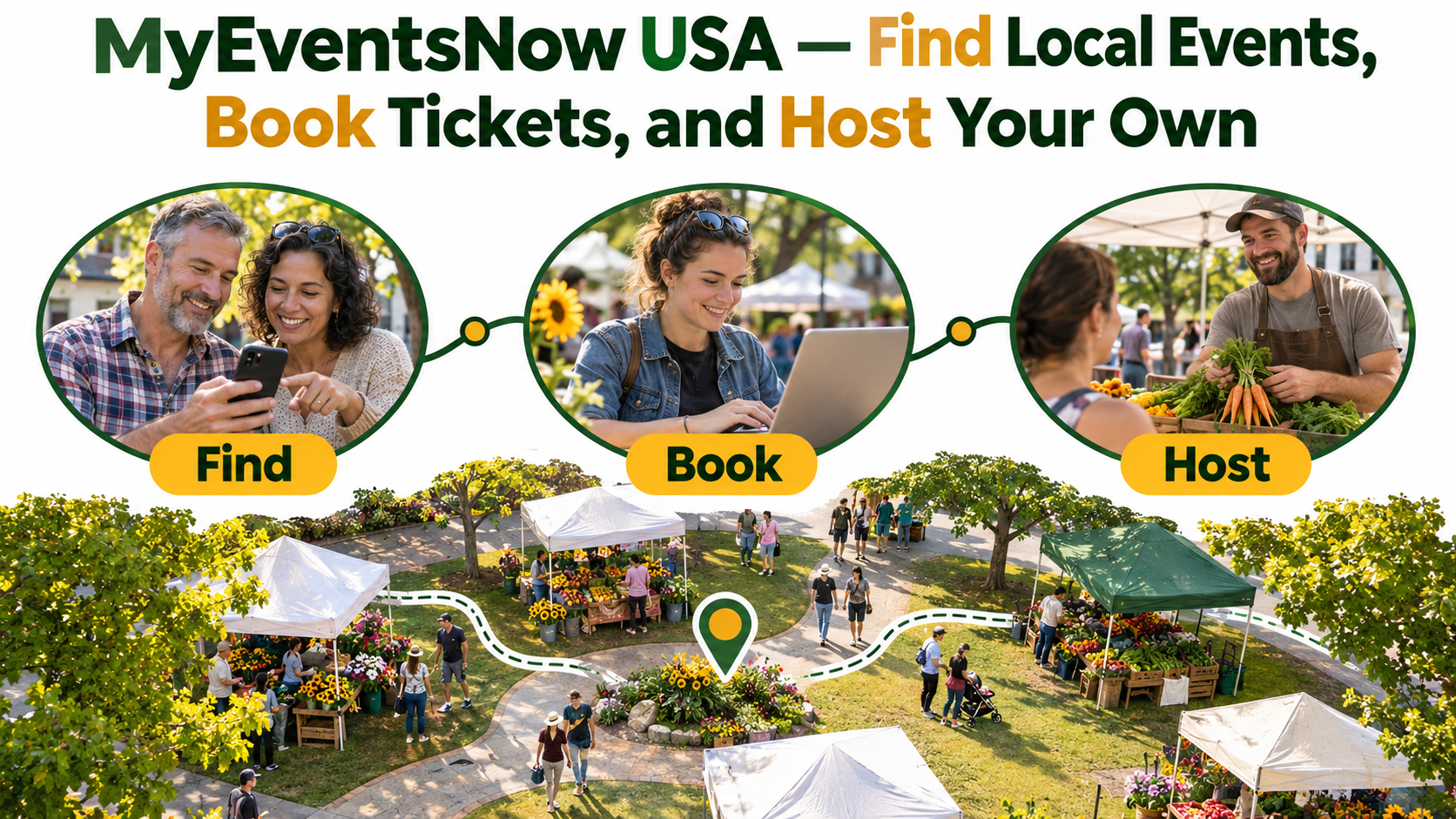
MyEventsNow USA brings event discovery, ticket booking options, event publishing, and organizer workflows together.
Visitors can explore different event categories and locations. Organizers can review the available tools for publishing event details and managing registrations.
The platform aims to connect people with events across the United States.
Explore the platform and its available features at MyEventsNow USA.
Review the current platform features and applicable terms before using its services.
Frequently Asked Questions
1. How can I book tickets for events in the USA?
Search for the event by name, category, or location. Review the event details and available ticket options. Then follow the organizer’s booking instructions. Always check the date, venue, fees, and cancellation conditions before completing your booking.
2. What types of upcoming events can I discover in the USA?
You can search for concerts, music festivals, comedy shows, business conferences, workshops, exhibitions, cultural celebrations, and community activities. Available listings depend on the platform, location, and event organizers.
3. Can I find events near my home?
Yes. Use a location-based search when the platform supports it. Enter your city or ZIP code, then review nearby activities. Check the venue and travel time before choosing an event.
4. What events can visitors explore in New York City?
Visitors can look for live music, theatre, art exhibitions, professional conferences, workshops, food festivals, and community celebrations. Check event listings for dates, locations, schedules, and registration details.
5. How do I choose the right concert tickets in the USA?
Compare the performer, venue, date, ticket category, price, and entry rules. Read the booking conditions carefully. Use a reliable booking channel and save your confirmation after completing the purchase.
6. Why do organizers use an event ticketing platform?
Organizers use ticketing platforms to publish event details and manage ticket-related activities. Depending on the service, they may configure admission options, review bookings, and share event information with potential attendees.
7. What information does event registration software collect?
Registration software can collect details such as attendee names, email addresses, and selected registration categories. Organizers should collect only necessary information and handle attendee data responsibly.
8. How can a small business sell event tickets online?
A small business can prepare an event listing, select a suitable ticketing service, configure admission options, and promote the event. It should compare platform fees and features before publishing the listing.
9. What should I prepare before listing an event online in the USA?
Prepare the event title, description, category, date, time, venue, organizer information, and registration instructions. Add ticket details and review everything before publishing. Accurate information helps visitors understand the event.
10. Is event management software useful for small events?
Yes, when its features match the event’s needs. A small workshop may benefit from basic registration and attendee records. Larger events may need ticket categories, communication tools, and more detailed reporting.
Final Thoughts: Turn Event Searches Into Better Experiences
Finding the right event starts with a clear idea of what you want to experience. A useful search process helps you compare activities, locations, schedules, and ticket options.
Organizers also need a clear plan. They must prepare accurate listings, select suitable registration tools, and keep attendees informed.
Online event platforms can support these activities in one connected journey. They give people more ways to discover experiences and help organizers manage important event tasks.
Whether you plan to attend a concert, join a workshop, or publish a community event, start with clear information. Compare your options and choose tools that suit your needs.
Explore MyEventsNow USA: https://myeventsnow.us/
