Introduction
Kerala is not only famous for its backwaters, beaches, and greenery but also for its deep and layered history shaped by centuries of trade, warfare, and colonial encounters. The forts of Kerala stand as silent witnesses to this past, preserving stories of kings, Portuguese explorers, Dutch traders, and British rulers.
For history lovers, these forts are more than stone structures. They are living heritage sites where architecture meets storytelling. From massive seaside fortresses guarding ancient trade routes to inland forts built by regional kingdoms, each site reflects Kerala’s strategic importance in India’s historical landscape.
Exploring these forts offers a journey through time—where every wall, tower, and gate reveals a piece of Kerala’s rich and diverse past.
Kerala’s Fort Heritage Overview
Kerala’s forts were built across different eras, primarily for:
- Defending coastal trade routes
- Protecting local kingdoms from invasions
- Controlling spice trade networks
- Establishing European colonial strongholds
Key Influences on Fort Architecture
- Portuguese Influence: Early coastal forts with European military design
- Dutch Influence: Strong defensive structures with strategic positioning
- British Influence: Administrative and military adaptations
- Local Kingdoms: Traditional Kerala-style fortifications using laterite stone
Most forts in Kerala are located along the coastline, reflecting the importance of maritime trade in shaping the region’s history.
Top 10 Best Forts in Kerala for History Lovers
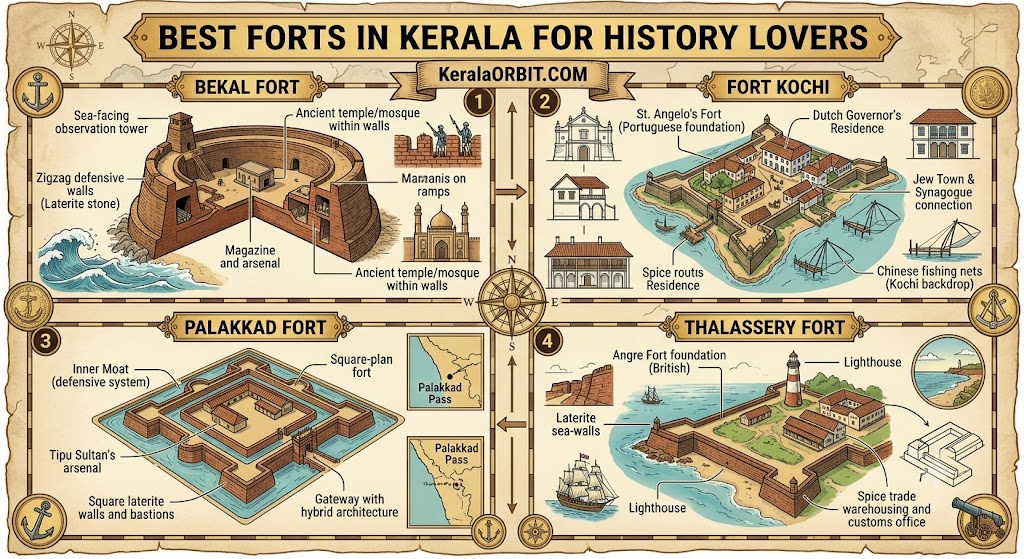
1. Bekal Fort – Kasaragod
Location: Northern Kerala
Historical Background: Built in the 17th century
Architectural Features:
- Massive keyhole-shaped structure
- Strong laterite stone walls
- Observation towers overlooking the sea
Historical Significance:
One of the largest and best-preserved forts in Kerala, built primarily for defense and surveillance of the Arabian Sea trade route.
Why Visit:
Offers stunning sea views and a powerful glimpse into Kerala’s maritime military history.
2. Fort Kochi (St. Angelo Fort Area) – Kochi
Location: Ernakulam District
Historical Background: Portuguese and Dutch era
Architectural Features:
- Colonial-style fort remnants
- Coastal defense structure
- Strategic harbor location
Historical Significance:
Fort Kochi played a major role in European trade dominance in Kerala.
Why Visit:
A perfect blend of history, colonial architecture, and vibrant cultural surroundings.
3. Palakkad Fort – Palakkad
Location: Central Kerala
Historical Background: Built by Hyder Ali
Architectural Features:
- Well-preserved granite walls
- Wide moat surrounding the fort
- Large open courtyards
Historical Significance:
A key military base during Mysore rule and later British occupation.
Why Visit:
One of the best-maintained inland forts in Kerala, ideal for history exploration.
4. Thalassery Fort – Kannur
Location: Northern Kerala
Historical Background: Built by the British East India Company
Architectural Features:
- Strong laterite walls
- Circular design elements
- Coastal defense positioning
Historical Significance:
A major British administrative and military center in Malabar.
Why Visit:
Offers a deep insight into colonial administration in Kerala.
5. St. Angelo Fort – Kannur
Location: Kannur Coast
Historical Background: Built by Portuguese in 1505
Architectural Features:
- Thick stone walls
- Sea-facing cannons
- Strategic hilltop location
Historical Significance:
One of the earliest European forts in India.
Why Visit:
Rich in colonial history and offers spectacular sunset views over the Arabian Sea.
6. Anjengo Fort – Thiruvananthapuram
Location: Anchuthengu
Historical Background: British East India Company
Architectural Features:
- Coastal fort with lighthouse nearby
- Simple rectangular structure
- Defensive walls facing sea
Historical Significance:
First British settlement on the Malabar Coast.
Why Visit:
Combines coastal beauty with colonial heritage.
7. Chandragiri Fort – Kasaragod
Location: Chandragiri River area
Historical Background: Built by Sivappa Nayaka
Architectural Features:
- Hilltop fort structure
- River-facing strategic view
- Ruined stone walls
Historical Significance:
Used to monitor river-based trade routes and defend northern Kerala.
Why Visit:
Perfect for sunset views and historical exploration.
8. Hosdurg Fort – Kanhangad
Location: Kasaragod District
Historical Background: Built by Ikkeri Nayakas
Architectural Features:
- Laterite stone construction
- Small temple within fort complex
- Square defensive layout
Historical Significance:
A regional defense fort reflecting inland military strategy.
Why Visit:
Quiet and less crowded, ideal for peaceful historical visits.
9. Kottappuram Fort – Kodungallur
Location: Near Periyar River
Historical Background: Portuguese-built fort
Architectural Features:
- River-facing structure
- Ruined stone remains
- Strategic waterway control
Historical Significance:
Played an important role in controlling spice trade routes.
Why Visit:
Great for understanding Kerala’s trade-based history.
10. Cranganore Fort Ruins – Kodungallur
Location: Thrissur District
Historical Background: Ancient fort site
Architectural Features:
- Mostly ruins today
- Stone foundations visible
- Archaeological significance
Historical Significance:
Once a powerful fort controlling ancient trade networks.
Why Visit:
A must-visit for archaeology and deep history enthusiasts.
Suggested History Travel Itinerary
3-Day Kerala Fort Trail
Day 1 – Kochi & Central Kerala
- Fort Kochi area exploration
- Kottappuram Fort
- Local heritage walk
Day 2 – Palakkad & Inland Forts
- Palakkad Fort
- Hosdurg Fort (optional extension)
Day 3 – Northern Kerala Coast
- Thalassery Fort
- St. Angelo Fort
- Bekal Fort sunset visit
Travel Tips for Visiting Forts
- Visit early morning or late afternoon for best lighting
- Carry water and sun protection
- Wear comfortable walking shoes
- Hire local guides for historical insights
- Respect heritage sites and avoid littering
Best Time to Visit Forts in Kerala
- October to March: Ideal weather for sightseeing
- April to May: Hot but manageable with early visits
- June to September: Monsoon adds dramatic beauty but may limit exploration
Conclusion
The forts of Kerala are powerful reminders of the state’s rich and strategic past. Each fort tells a unique story—of kings defending their kingdoms, traders crossing oceans, and colonial powers shaping coastal India.
For history lovers, these forts offer an unforgettable journey through centuries of heritage, architecture, and cultural evolution. From the grand Bekal Fort to the colonial remnants of Fort Kochi, every destination adds depth to Kerala’s historical identity.
