Introduction
Kerala is widely known for its serene backwaters, lush green landscapes, and rich cultural diversity. What makes the state even more fascinating is its deep-rooted tradition of peaceful coexistence among different religions and communities. Among these cultural layers, Kerala’s Islamic heritage holds a unique place, shaped by centuries of maritime trade, Arab influence, and local integration.
For cultural travelers, mosques in Kerala are not just places of worship but also living monuments of history, architecture, and community life. Many of these mosques reflect a rare blend of Kerala’s traditional architecture with Middle Eastern influences, creating structures that are both spiritually significant and visually remarkable.
Exploring these mosques offers a deeper understanding of Kerala’s inclusive identity and its long-standing connection with global trade routes.
Kerala’s Islamic Heritage Overview
Islam in Kerala dates back over a thousand years, introduced through Arab traders who arrived on the Malabar Coast for commerce. Over time, peaceful trade relationships led to cultural exchange, intermarriage, and the establishment of early Muslim communities.
Key highlights of Kerala’s Islamic heritage:
- Early arrival through maritime trade routes
- Strong Arab cultural and linguistic influence
- Integration with local Kerala traditions
- Unique mosque architecture influenced by temple and traditional Kerala styles
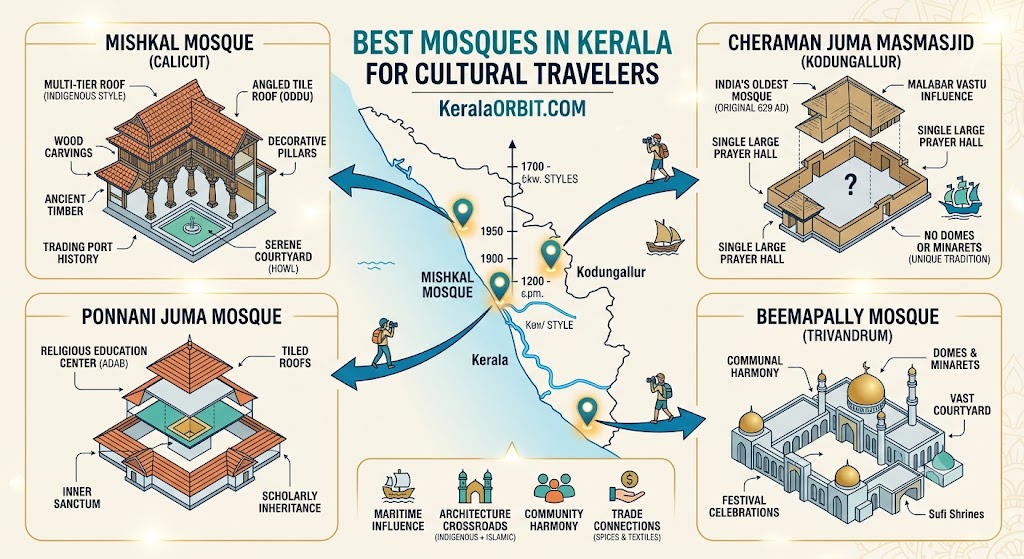
Unlike many other regions, Kerala’s mosques often resemble traditional structures with sloping roofs, wooden carvings, and minimalistic designs rather than domes and minarets alone. This architectural fusion makes them especially interesting for cultural exploration.
Top 10 Best Mosques in Kerala for Cultural Travelers
1. Cheraman Juma Masjid – Kodungallur
Location: Thrissur District
Historical Background: Built over 1,000 years ago
Architectural Style:
- Traditional Kerala-style architecture
- Wooden interiors and sloped roof design
Cultural Significance:
Believed to be the first mosque in India, linked to the legendary conversion of Cheraman Perumal.
Why Visit:
A symbol of India’s early Islamic history and interfaith harmony.
2. Mishkal Mosque – Kozhikode
Location: Kozhikode
Historical Background: 14th century
Architectural Style:
- Multi-story wooden structure
- Traditional Malabar design
Cultural Significance:
Built by a wealthy Arab merchant family, reflecting Indo-Arab trade relations.
Why Visit:
One of the finest examples of traditional mosque architecture in Kerala.
3. Thazhathangadi Juma Masjid – Kottayam
Location: Kottayam
Historical Background: Over 1,000 years old
Architectural Style:
- Beautiful wooden carvings
- Traditional Kerala temple-style influence
Cultural Significance:
One of the oldest mosques in Kerala’s inland region.
Why Visit:
Known for its craftsmanship and peaceful riverside location.
4. Palayam Juma Masjid – Thiruvananthapuram
Location: Capital City
Historical Background: Modern heritage mosque
Architectural Style:
- Blend of modern and traditional design
- Large prayer hall
Cultural Significance:
Important urban mosque representing Kerala’s contemporary Islamic community.
Why Visit:
Located in the heart of the city, accessible and architecturally impressive.
5. Kuttichira Mosque – Kozhikode
Location: Kozhikode
Historical Background: Ancient mosque cluster
Architectural Style:
- Wooden structures
- Traditional Malabar craftsmanship
Cultural Significance:
Represents the historic Muslim settlement area of Kozhikode.
Why Visit:
A cluster of heritage mosques showcasing Islamic cultural evolution.
6. Valiya Juma Masjid – Malappuram
Location: Malappuram
Historical Background: Historic religious center
Architectural Style:
- Traditional Kerala mosque design
- Spacious prayer halls
Cultural Significance:
Important center of Islamic learning and community life.
Why Visit:
Known for religious scholarship and cultural importance.
7. Madayi Palli – Kannur
Location: Kannur District
Historical Background: One of the earliest mosques in Kerala
Architectural Style:
- Simple traditional structure
- Coastal architectural influence
Cultural Significance:
Linked to early Islamic arrival in northern Kerala.
Why Visit:
Rich historical significance and peaceful surroundings.
8. Valapattanam Mosque – Kannur
Location: Kannur
Historical Background: Historic coastal mosque
Architectural Style:
- Kerala wooden architecture
- Coastal design elements
Cultural Significance:
Built near ancient trade ports used by Arab merchants.
Why Visit:
Reflects Kerala’s maritime trade history.
9. Odathil Palli – Thalassery
Location: Thalassery
Historical Background: 18th century
Architectural Style:
- Influenced by Kerala and colonial styles
- Elegant wooden interiors
Cultural Significance:
Built by a wealthy trading family during colonial times.
Why Visit:
A beautiful blend of cultural and historical architecture.
10. Parappanangadi Mosque – Malappuram
Location: Malappuram District
Historical Background: Ancient coastal mosque
Architectural Style:
- Traditional Malabar design
- Simple yet elegant structure
Cultural Significance:
Important religious and community center in coastal Kerala.
Why Visit:
Represents Kerala’s coastal Islamic heritage.
Cultural Etiquette for Visitors
When visiting mosques in Kerala, cultural respect is essential:
- Dress modestly with covered shoulders and knees
- Remove footwear before entering mosque premises
- Maintain silence and respectful behavior
- Avoid restricted prayer areas during prayer times
- Ask permission before photography
Suggested Cultural Travel Itinerary
3-Day Kerala Mosque Heritage Trail
Day 1: Kozhikode Region
- Mishkal Mosque
- Kuttichira Mosque cluster
- Local heritage walk
Day 2: Malappuram & Coastal Route
- Valiya Juma Masjid
- Parappanangadi Mosque
- Cultural exploration
Day 3: Central Kerala
- Cheraman Juma Masjid
- Thazhathangadi Juma Masjid
- Riverside heritage experience
Best Time to Visit Mosques in Kerala
- October to March: Pleasant weather for travel and exploration
- June to September: Monsoon adds scenic beauty but requires travel caution
- April to May: Warm weather, suitable for short visits
Conclusion
The mosques of Kerala are far more than religious structures—they are living symbols of history, culture, and architectural evolution. Each mosque tells a story of trade, tradition, and harmonious coexistence that defines Kerala’s identity.
For cultural travelers, exploring these mosques offers a unique opportunity to witness centuries of heritage preserved in wood, stone, and community memory. From the legendary Cheraman Juma Masjid to the historic coastal mosques of Kozhikode and Kannur, every destination adds a new layer to Kerala’s rich cultural tapestry.
