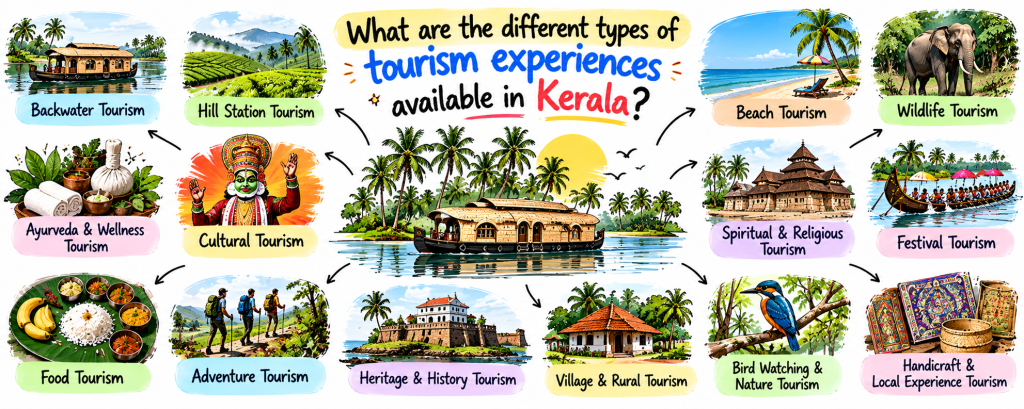
Kerala offers many ways to enjoy a holiday.
You can cruise through calm backwaters. You can also walk on quiet beaches.
You can visit green hills, forests, temples, and old towns.
Kerala also offers food, art, festivals, and wellness trips.
The official Kerala Tourism site lists many of these experiences. These include hills, beaches, backwaters, wildlife, art, culture, and wellness.
So, Kerala can suit many types of travellers.
Backwater Tourism
Backwaters are one of Kerala’s most known travel experiences.
These waterways pass through villages, farms, and green landscapes.
Visitors can take a houseboat ride on the backwaters.
Alappuzha and Kumarakom are popular places for this experience.
A houseboat trip lets you see daily life near the water.
You may pass small homes, coconut trees, farms, and fishing areas.
Some houseboats also serve local Kerala food during the trip.
Backwater tourism works well for people who want a slow holiday.
It gives you time to enjoy the views without a busy schedule.
Hill Station Tourism
Kerala has many green hill areas.
Munnar, Wayanad, and Thekkady are popular choices.
These places offer cool weather, forests, tea gardens, and mountain views.
Munnar is well known for its tea plantations.
Wayanad offers forests, waterfalls, caves, and nature spots.
Thekkady gives visitors access to wildlife and spice plantation experiences.
Hill trips can also include trekking and nature walks.
So, they work well for people who enjoy fresh air and outdoor activities.
Beach Tourism
Kerala has a long coastline along the Arabian Sea.
Visitors can enjoy beaches in places such as Kovalam, Varkala, and Marari.
Some beaches also offer water activities.
Visitors may enjoy swimming, surfing, or simply walking near the shore.
Beach trips do not always need a packed plan.
You can spend the morning exploring.
Then you can enjoy the sunset near the sea.
Always check local safety advice before entering the water.
Weather and sea conditions can change during the day.
Wildlife Tourism
Kerala has many forests and protected wildlife areas.
Periyar, Silent Valley, and Eravikulam are well-known examples.
Visitors can explore forests and look for local wildlife.
Bird watching is also possible in several areas.
Wildlife trips need patience.
Animals may not appear when you expect them.
Visitors should follow park rules and listen to guides.
Never feed animals or disturb them for photographs.
This helps protect both visitors and wildlife.
Ayurveda and Wellness Tourism
Ayurveda is an important part of Kerala’s tourism.
Visitors can find Ayurvedic treatments, wellness centres, and related experiences.
Kerala Tourism also highlights Ayurveda and wellness retreats on its official site.
Some people choose a wellness trip to rest and slow down.
Others combine Ayurveda with a normal holiday.
If you plan a treatment, check the provider first.
Ask about the treatment, duration, cost, and qualifications.
Do not assume that every wellness centre offers the same service.
Cultural Tourism
Kerala has a rich tradition of art and culture.
Visitors can watch traditional performances during their trip.
Kathakali, Mohiniyattam, Theyyam, and Kutiyattam are examples of Kerala’s traditional art forms.
Theyyam is strongly linked with northern Kerala.
Kathakali is known for its costumes and expressive movements.
These performances can help visitors understand local stories and traditions.
Cultural tourism works well for people who want more than sightseeing.
It gives you a chance to learn while you travel.
Festival Tourism
Festivals can add a special experience to a Kerala trip.
Onam is one of Kerala’s major festivals.
Other events include Thrissur Pooram and traditional boat races.
Festival dates can change each year.
Popular events can also attract large crowds.
So, check the official event details before planning your trip.
Book hotels early when you expect heavy visitor traffic.
Also respect local customs during religious and cultural events.
Food Tourism
Food is another important part of a Kerala trip.
Kerala has many dishes linked with local regions and traditions.
Visitors can try dishes such as appam, puttu, seafood, and Malabar snacks.
Sadya is another well-known food experience.
It is a traditional vegetarian meal served on a banana leaf.
Food tourism can include restaurants, markets, local homes, and food walks.
Try local food slowly and ask about ingredients when needed.
This is especially useful if you have food allergies.
Adventure Tourism
Kerala also offers outdoor activities.
Visitors can find trekking, kayaking, cycling, rafting, and other nature-based activities.
The right activity depends on the location.
It also depends on weather and your experience level.
A beginner should not choose a difficult trail without proper guidance.
Check the safety rules before booking an activity.
Use trained guides when the activity requires special skills.
Village and Rural Tourism
A village experience can show a quieter side of Kerala.
Visitors can stay in homestays and learn about local life.
Some experiences include farming, local food, crafts, and daily village activities.
This type of travel can feel more personal.
You may learn how local families live and work.
It can also support small local businesses.
Always respect private homes and local customs.
Ask before taking photographs of people or private spaces.
Heritage and History Tourism
Kerala also has many historic places.
Visitors can explore palaces, forts, museums, temples, and old streets.
Fort Kochi is one example of a place with a strong historic character.
Mattancherry Palace and other heritage sites also attract visitors.
History tourism can make a trip more meaningful.
Instead of only taking photographs, learn why the place matters.
A local guide can help explain stories that you may miss on your own.
Spiritual Tourism
Kerala has many temples, churches, mosques, and pilgrimage centres.
Visitors can explore religious places as part of a spiritual trip.
The Kerala Tourism website has a dedicated spirituality category.
Guruvayur Temple and Sree Padmanabhaswamy Temple are well-known examples.
Visitors should learn the entry rules before visiting.
Dress rules can differ from one place to another.
Some places may also limit photography.
Respect these rules during your visit.
Eco-Tourism
Eco-tourism focuses on nature and responsible travel.
Kerala offers eco-tourism experiences around forests, hills, backwaters, and villages.
Visitors can explore nature while reducing harm to the environment.
Simple actions can make a difference.
Avoid plastic waste.
Do not disturb animals.
Save water and respect local communities.
Choose local services when practical.
These habits can help protect the places you visit.
Plantation Tourism
Kerala’s hills are known for tea and spice plantations.
Munnar is famous for its tea-growing landscapes.
Thekkady also offers spice plantation experiences.
Visitors can learn how crops grow and how they reach markets.
A plantation visit can also add variety to a sightseeing trip.
It works well for people who enjoy nature and local farming.
Some plantation stays also offer peaceful views and fresh local food.
Homestay Experiences
A homestay can offer a different travel experience.
Instead of staying in a large hotel, visitors stay with a local family.
This can help visitors learn about local food and daily life.
Kerala Tourism also highlights homestays as a way to experience local culture.
Before booking, check whether the property has the required approvals.
Also read the rules and facilities carefully.
A homestay should match your comfort and travel needs.
Boat Race and Water Experiences
Kerala’s waterways are also linked with traditional boat races.
Snake boat races are a major cultural attraction.
These events combine teamwork, music, and local tradition.
The races can create a lively atmosphere.
They also show an important part of Kerala’s water culture.
If you plan to watch a major race, check the event date first.
Crowds can become large around popular race locations.
How to Choose the Right Kerala Experience
You do not need to choose only one type of tourism.
A good Kerala trip can mix several experiences.
For example, you could combine:
- Backwaters
- Beaches
- Hill stations
- Wildlife
- Local food
- Cultural shows
- Ayurveda
- Village experiences
Your travel time should guide your choices.
Do not add too many places to one day.
Long travel between destinations can make a trip tiring.
Instead, choose experiences that are close to each other.
A Simple Way to Plan Your Trip
Start by asking what you want from the trip.
Do you want rest?
Choose beaches, backwaters, or wellness experiences.
Do you want nature?
Choose hills, wildlife, waterfalls, or plantations.
Do you want culture?
Choose festivals, traditional arts, villages, and heritage sites.
Do you want adventure?
Choose trekking, kayaking, cycling, or other outdoor activities.
This simple method can help you build a better plan.
Things to Check Before You Travel
Different experiences need different planning.
Check weather before outdoor activities.
Check opening hours before visiting attractions.
Check event dates before planning festival trips.
Check safety rules before adventure activities.
Also check travel time between destinations.
Kerala has many places to visit, but you cannot see everything in one trip.
A simple plan often works better than a rushed one.
Final Thoughts
Kerala offers many types of tourism experiences.
You can enjoy backwaters, beaches, hills, forests, food, culture, and wellness.
You can also explore villages, plantations, heritage sites, and festivals.
The official Kerala Tourism website also highlights wildlife, art, culture, spirituality, unique destinations, and responsible travel.
The best trip depends on what you enjoy.
Start with two or three main interests.
Then build your route around them.
Leave enough time to enjoy each place.
That way, your Kerala trip can feel relaxed, useful, and memorable.
Quick Planning Checklist
Before your Kerala trip, check these points:
- Choose your main travel interests.
- Pick destinations that match them.
- Check the weather.
- Check travel time.
- Confirm opening hours.
- Check event dates.
- Book important stays early.
- Follow local rules.
- Respect nature and local culture.
- Keep some free time in your plan.
A little planning can make the whole trip easier.
Hashtags
#KeralaTourism · #KeralaTravel · #VisitKerala · #KeralaBackwaters · #KeralaCulture · #KeralaWildlife · #KeralaTourismGuide · #KeralaTravelGuide
